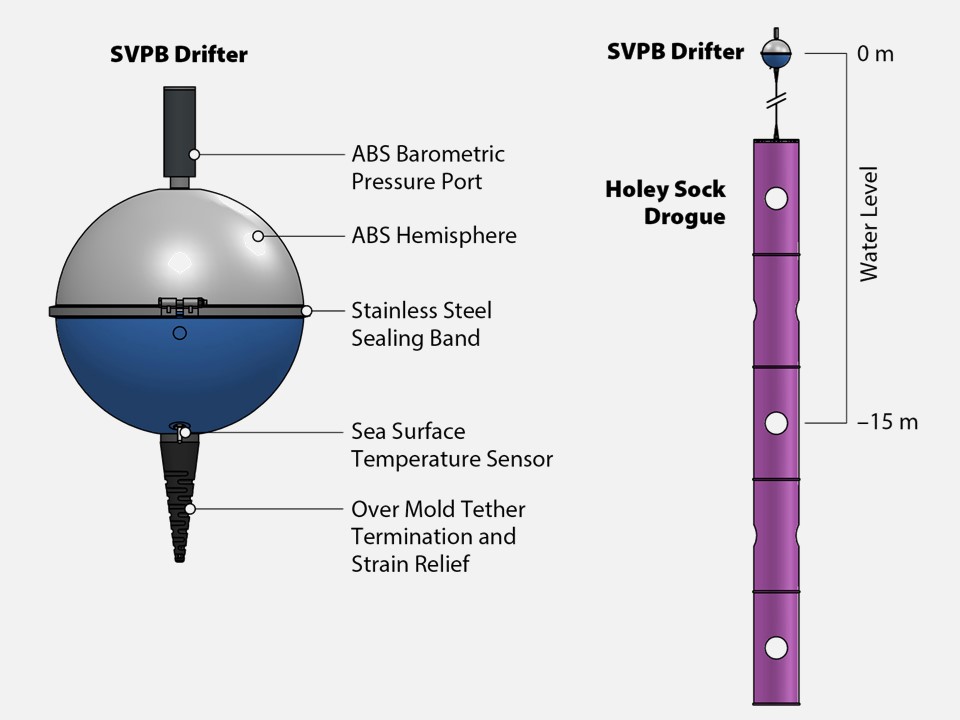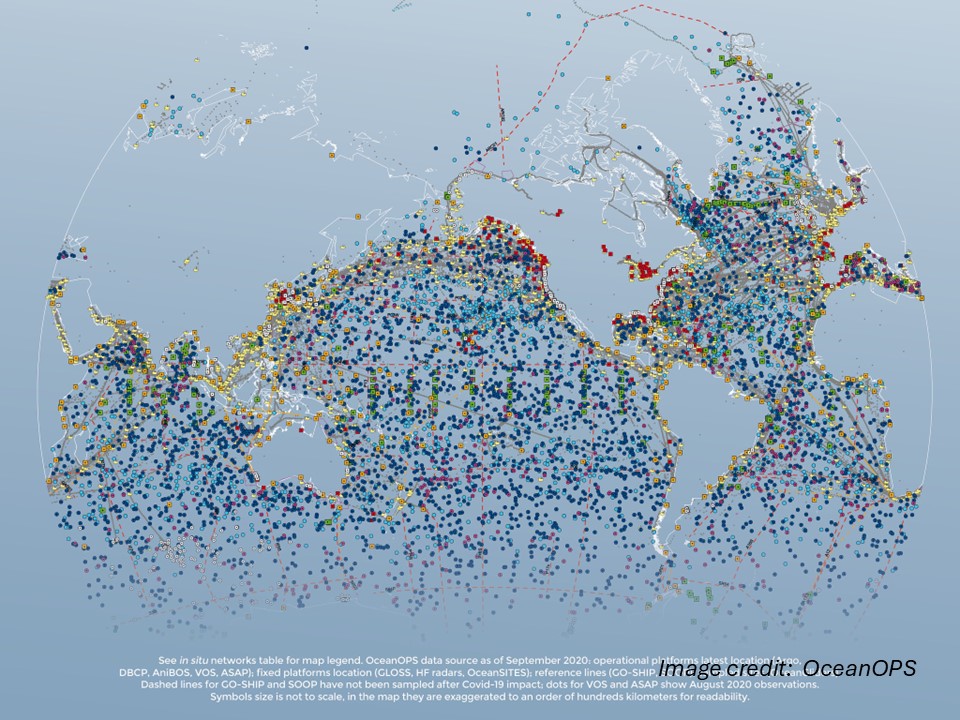



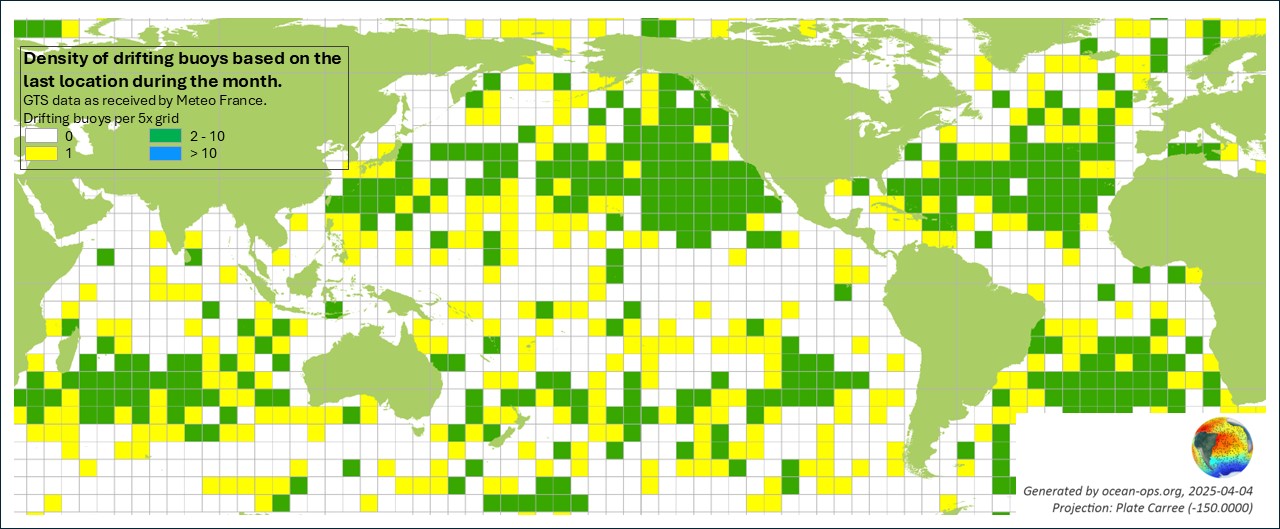
The buoy network is, in reality, not evenly dispersed across the whole ocean, due to difficulties in deploying buoys in very remote areas (especially the southern ocean) and because the buoys follow ocean currents they can often drift out of certain zones quickly or clump together in other convergence zones.
This is a major challenge for the DBCP.
The countries participating in the DBCP have been working for many years to collectively build up the resources necessary to maintain 1250 buoys operationally. The voluntary service of research vessels and commercial freighters, tankers, and other ships transiting the global oceans is an essential component of the system as they deploy the buoys needed to re-seed and maintain the network.
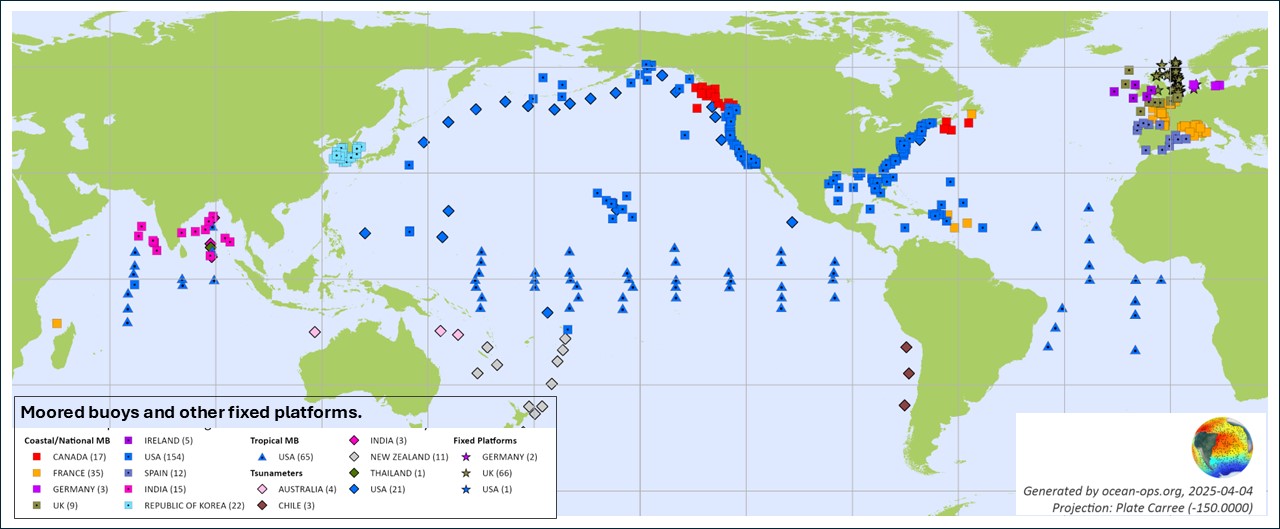
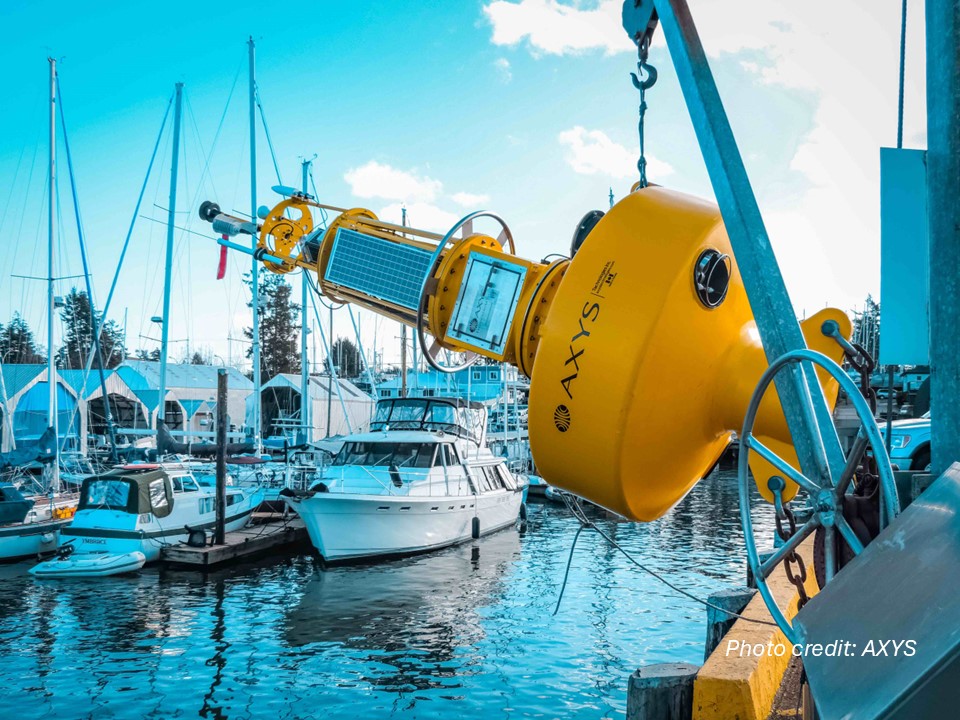
Most drifting buoys are deployed by commercial ships and research vessels. Without such cooperation the global buoy network of over 1250 drifting buoys and 400 moored buoys could not exist today and will be hard to sustain in future. Buoys are pre-packaged for easy deployment, from the lowest deck or ramp, whilst underway.
Buoy retrieval then, should only be undertaken by the owner of the buoy or under instruction from the owner. In general, drifting buoys are not recovered, as they are expendable platforms. The drogue could be potentially dangerous and if a buoy has been in the water for a long time it may have a lot of shell life on the casing, which could cause injury.