


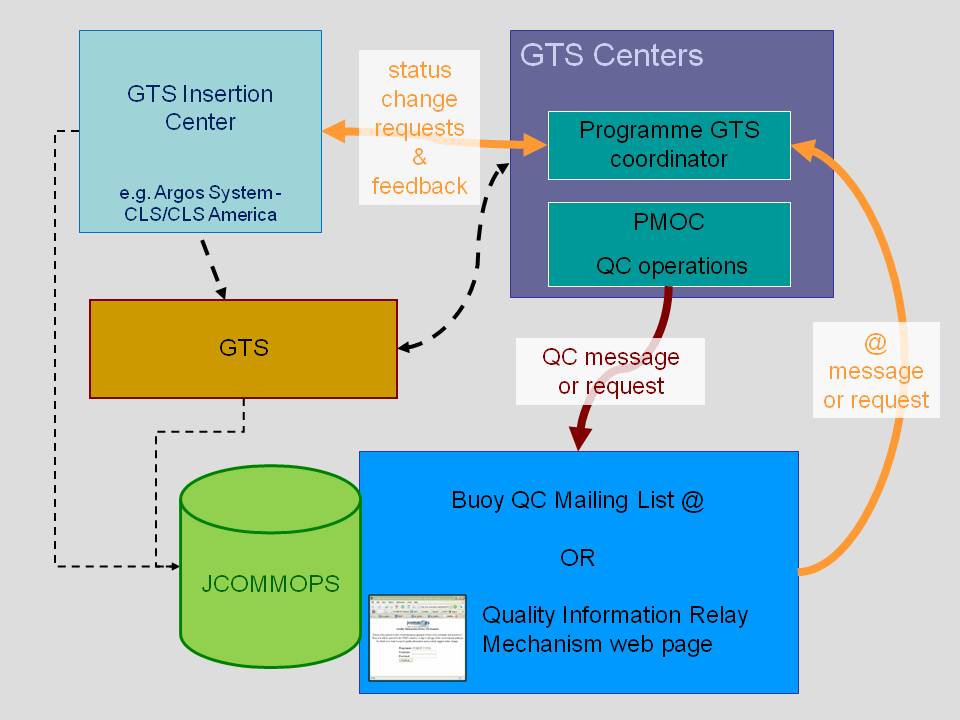
The DBCP has developed and implements several types of quality control procedures. The first one would be an automated checks on incoming GTS Data. Before data is put onto the GTS, Data Processing centres and the operators of buoys ensure that surface observations are validated in real-time, performing a set of tests as described in DBCP Technical Document No. 2.
Regular quality assessments by Quality Control Centers are then carried out to ensure that poor quality data is removed, as quickly as possible, from the GTS, based on feedback on individual data buoys. A well-defined feedback mechanism ensures that any interventions arising from this off-line quality control (e.g., modifications to individual sensor transfer functions) are communicated to buoy operators and processing centers so that modifications can be implemented into the real-time data processing chain in a coordinated and auditable fashion.Feed back can be via a web interface, known as the QC Relay Mechanism (see below) or via the DBCP QC mailing list.
Buoy Monitoring Statistics (Monthly) is carried out by several other bodies (ECMWF, national weather and oceanographic agencies, GDC, ISDM, etc.) contributing to regular assessment of data quality for all buoys on the GTS for the previous month.